Certified & Compliant




Trusted by Corporates Across Industries

Enterprises
Fortune 500 companies trust us

BFSI
Banks, NBFCs, FinTech

Healthcare & Pharma
HIPAA-compliant solutions

Government & Public Sector
Sovereign data protection

SaaS & Startups
Scale with confidence

Global Organizations
Multi-region compliance
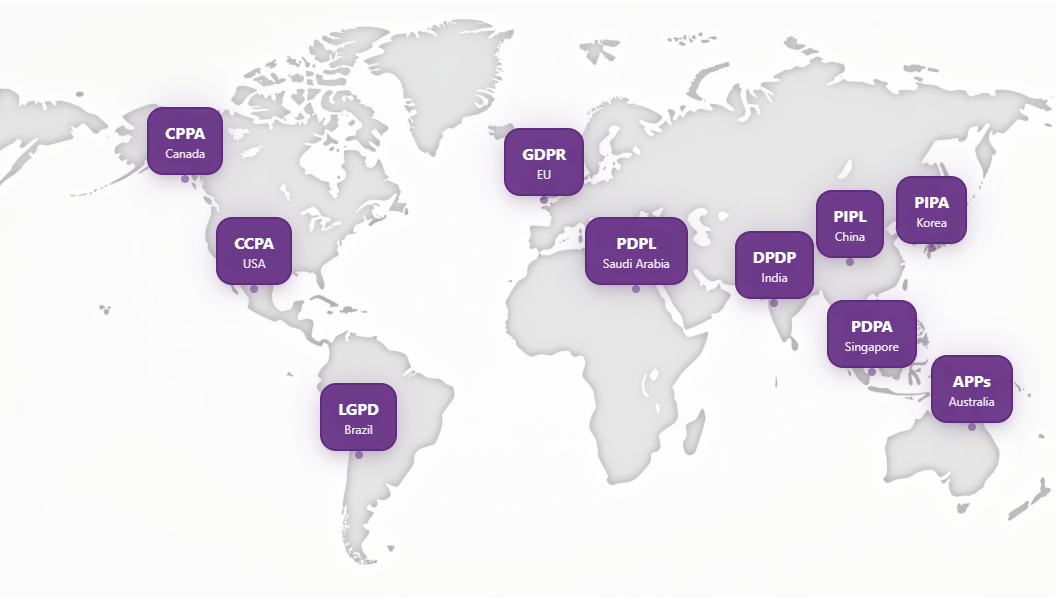
Built for India & Ready for the World.
PrivacyGlobal brings DPDP compliance into harmony with global data privacy regulations.

Move Beyond Manual Compliance
Traditional audits and spreadsheets can't keep pace with modern privacy laws.
Privacy Global automates compliance across GDPR, DPDP, CCPA, PDPA, PDPL — ensuring every data flow, risk, and policy remains continuously aligned and audit-ready.
Management Ready Dashboard
Actionable Compliance and Risk Insights
Real-time Monitoring
Continuous compliance tracking across all systems
Automated Reporting
Generate audit-ready reports in minutes, not months
AI-Powered Intelligence
Smart insights that adapt to regulatory changes
Governance & Risk Management
Managing risk through clear governance
WHY PRIVACY GLOBAL?
Privacy Global simplifies Data Privacy and Protection by assisting organizations assess, implement, manage, and scale their privacy programs.
Privacy at the Core
Privacy is our core offering, not an add-on to cybersecurity
Global & Local
"One solution for all assessments", audits, and compliance, guided by S.M.Es
One Platform. Expert Support.
DPDP, GDPR, CCPA, PDPA & many more across 35+ jurisdictions
Ready for Certification
Easily get ready for DPDP, GDPR, CCPA, PDPA, etc , for compliance certifications
Built on Decades of Trust
Backed by GreenPoint Global's 20+ years in compliance, legal, and cybersecurity
Dashboard View
Explore our intuitive dashboard interface with powerful insights at your fingertips
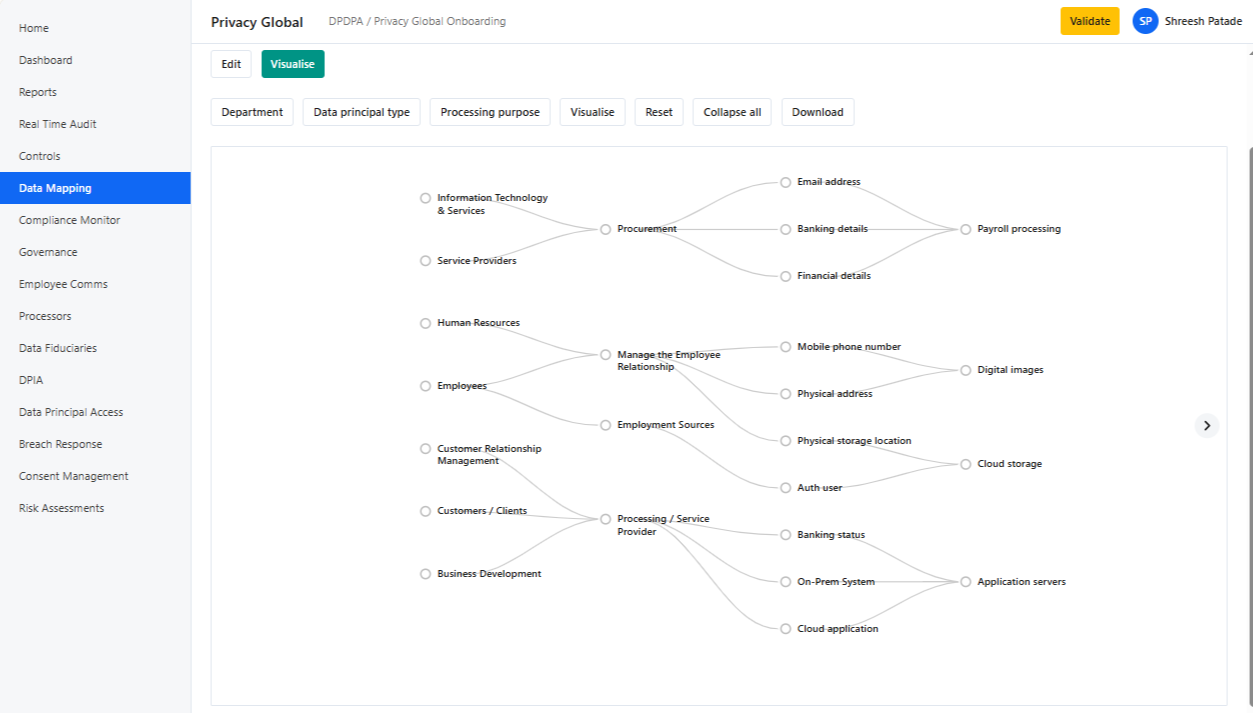
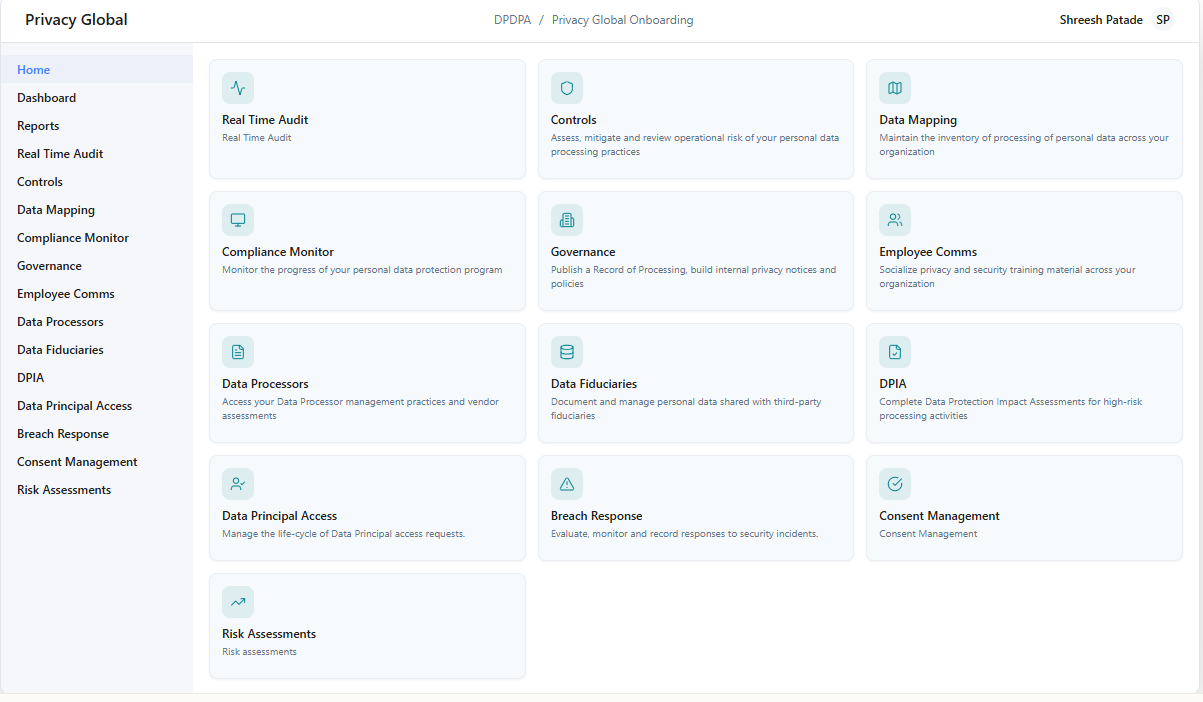
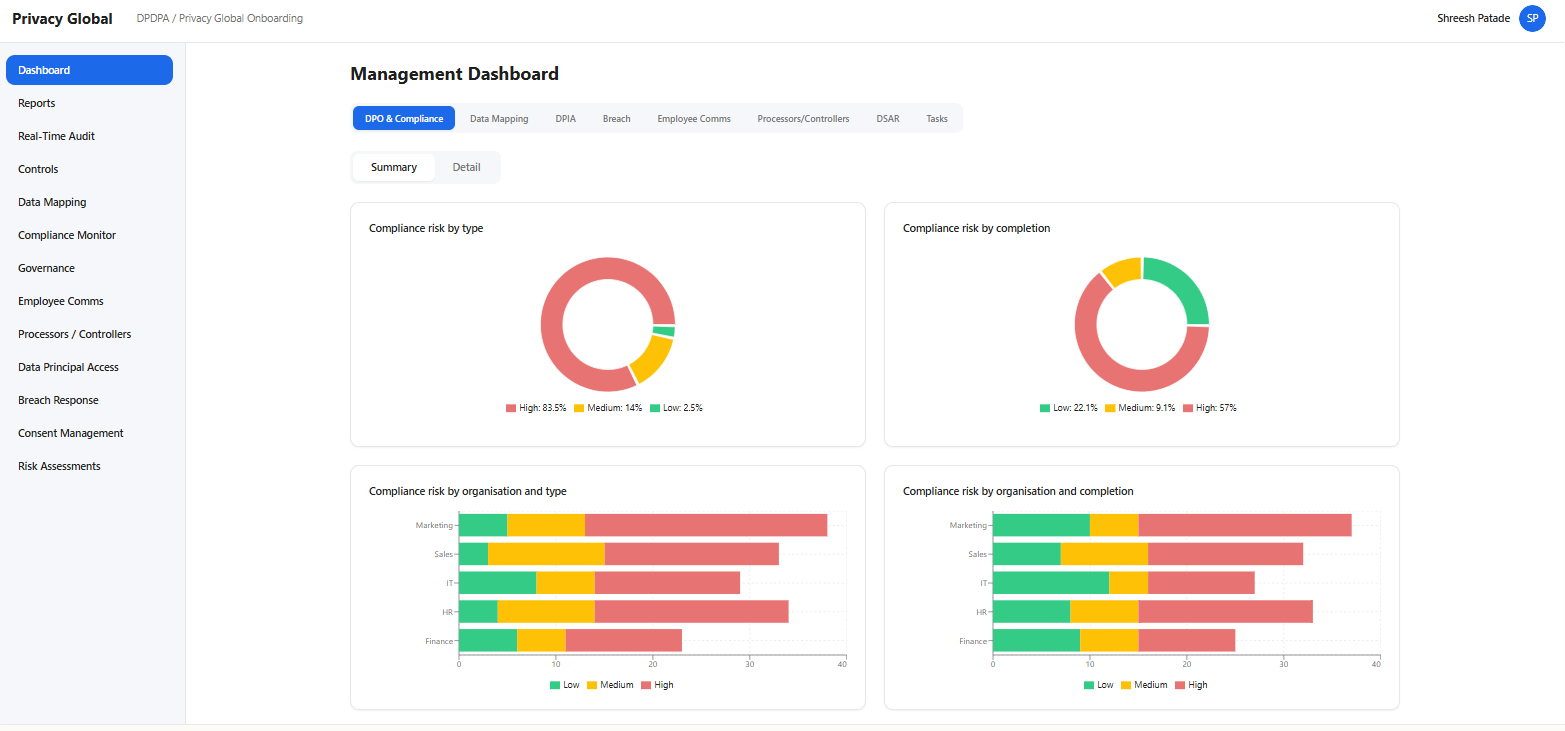
"A single source of truth for your entire privacy program"
Partner with Privacy Global
Expand Your Services. Empower Your Clients. Earn More.

New Revenue Streams
Monetize your existing client relationships with high-value G.R.C services

No Extra Overhead
We handle documentation, implementation, audits, and certification

Boost Client Retention
Offer comprehensive G.R.C compliance that builds lasting relationships

Competitive Edge
Stand out with a complete service portfolio and expert backing
Core Modules for Complete Protection
Everything required to stay compliant—automated, intelligent, and continuously updated.

Automated Data Mapping
Identify and categorize personal data across systems instantly. No manual inventory required.

Real-Time Risk Assessment
Continuously monitor compliance risk with AI-powered threat detection and mitigation.

Consent Lifecycle Management
Capture and manage user consent globally with automated preference centers.

Regulatory Reporting Automation
Generate audit-ready reports in minutes for DPDP, GDPR, CCPA, and 9+ frameworks.

Continuous Compliance Monitoring
Stay aligned with evolving regulations through intelligent policy updates and alerts.
Our Valued Customers
Trusted by leading organizations worldwide to automate privacy, strengthen governance risk, compliance, and ensure data protection with confidence.















Get in Touch
Have questions? Send us a message and we'll respond shortly.
Contact Information
Phone
+91 98923 01317Office
Unit #T241, Tower #10, ITC, CBD Belapur, Navi Mumbai, India – 400614