Table of contents
By-Research Team
April 14, 2026 | 6 min read | DPDP
Data Principal vs Data Fiduciary: What’s the Difference?
India’s Digital Personal Data Protection Act, 2023 (DPDP Act) establishes a legal framework for processing personal data in a lawful, transparent, and accountable manner. It defines key roles, rights, and obligations that organizations must follow when handling personal data.
Understanding these roles is essential for achieving compliance.
Yet, most compliance gaps do not come from lack of intent—they come from misunderstanding roles.
Before you implement policies or systems, you need clarity on one critical question:
Who is responsible for what?
Why Is It Important to Understand the Difference Between Data Principal & Data Fiduciary?
Understanding the difference between data principal & data fiduciary is essential because all compliance obligations under the DPDP Act are built on these roles. Misidentifying them leads to incorrect consent practices, ineffective grievance mechanisms, and regulatory non-compliance. Clear role definition ensures proper implementation of data principal rights and data fiduciary duties.
This is where most organizations struggle.
- Policies are created without mapping roles
- Responsibilities are assigned without legal clarity
- Systems are implemented without aligning to obligations
The result?
Compliance exists in documentation but fails in execution.
So, before anything else—define the roles correctly.
What Is the Difference Between a Data Principal and a Data Fiduciary Under the DPDP Act?
A data principal is the individual whose personal data is processed, while a data fiduciary is the entity that determines the purpose and means of processing that data under the DPDP Act. One is the subject of the data, and the other is responsible for its lawful use, protection, and governance.
Now break this down into operational clarity.
- Data Principal: The individual to whom the personal data relates
- Data Fiduciary: The organization that decides how and why that data is processed
This distinction directly impacts:
- Consent collection
- Data processing decisions
- Accountability during incidents
If this is unclear, your data protection compliance in India becomes inconsistent.
Who is a Data Principal?
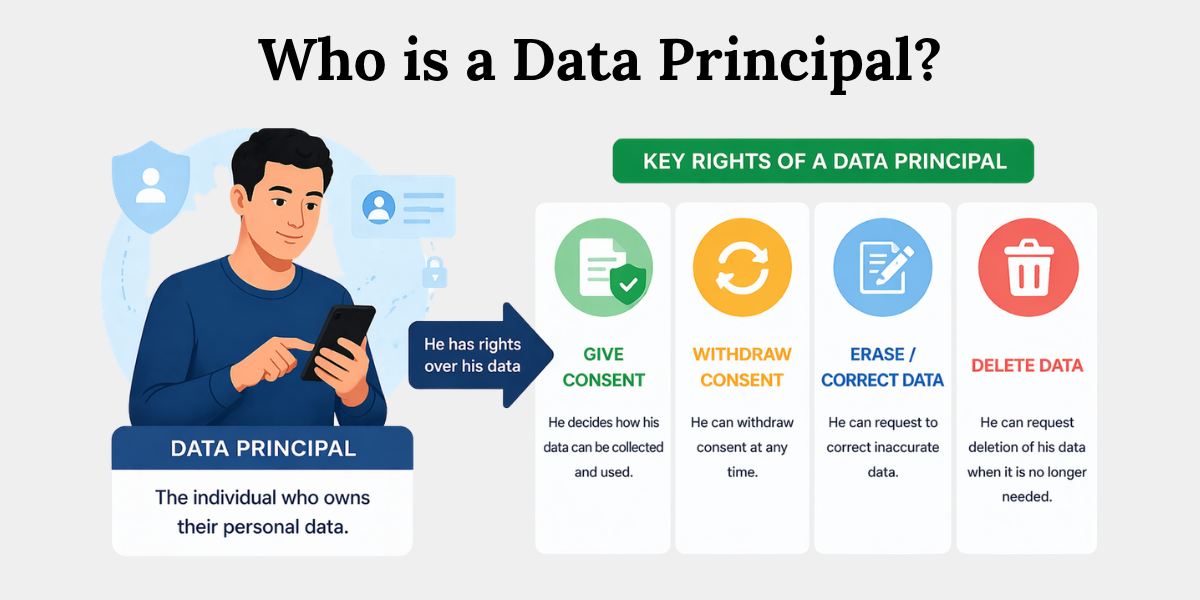
A data principal is any individual whose personal data is processed under the DPDP Act, including customers, users, and employees. They are granted enforceable rights such as access, correction, erasure, and grievance redressal, making them central to the compliance framework.
Key Data Principal Rights
1. Right to Access Information
Individuals can request details about what personal data is being processed and for what purpose. This requires structured data retrieval systems.
2. Right to Correction and Erasure
Data must be updated or deleted upon request when legally applicable. This impacts your data lifecycle processes.
3. Right to Grievance Redressal
Organizations must provide a clear way for data principals to raise complaints. These complaints should be resolved within a reasonable timeframe.
4. Right to Nominate
Individuals can nominate another person to act on their behalf. This applies when they are unable to exercise their rights themselves.
In practice:
If these rights cannot be executed operationally, compliance remains incomplete.
Who is a Data Fiduciary?
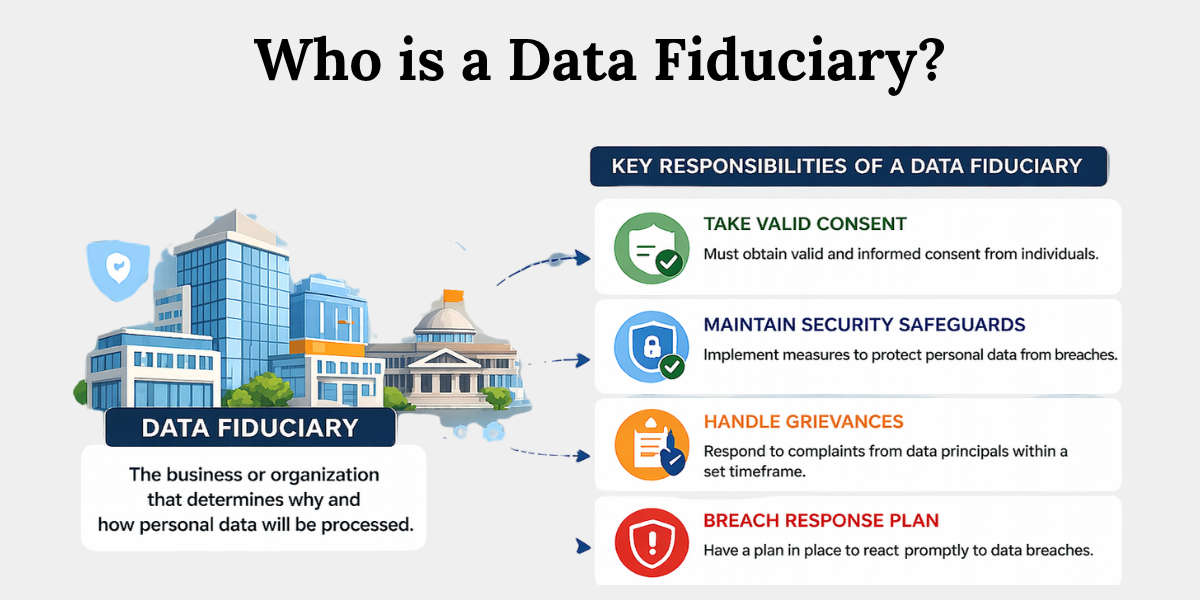
A data fiduciary is any entity that determines the purpose and means of processing personal data and is responsible for complying with the DPDP Act. Its duties include lawful processing, implementing safeguards, and enabling data principal rights through systems and processes.
Core Data Fiduciary Duties
1. Purpose-Limited Processing
Personal data must only be collected and used for a clearly defined and lawful purpose. Organizations cannot reuse the same data for unrelated activities without proper justification. For example, if data is collected for account creation, it cannot later be used for marketing without additional consent.
2. Consent Management
Processing of personal data must be based on valid, informed, and specific consent from the data principal, unless it falls under legitimate use. This means users should clearly understand what they are agreeing to before their data is used. Organizations must also provide an easy way to withdraw consent at any time.
3. Security Safeguards
Organizations are required to implement appropriate technical and organizational measures to protect personal data from breaches or unauthorized access. This includes tools like encryption, access controls, and regular system monitoring. Weak security systems increase the risk of data leaks and regulatory penalties.
4. Grievance Handling Mechanism
A proper system must be in place to receive and resolve complaints from data principals within a defined timeframe. This includes setting up support channels and tracking requests efficiently. Delayed or ignored complaints can lead to legal consequences and loss of user trust.
5. Breach Notification
In case of a data breach, organizations must promptly inform the relevant authorities and affected individuals as required under the law. This ensures transparency and allows users to take necessary precautions. Delayed reporting can increase liability and regulatory scrutiny.
Organizations that operationalize these duties—not just document them—are better positioned for compliance.
Rights vs Duties Mapping (Compliance Alignment)
Under the DPDP Act, every data principal right has a corresponding data fiduciary duty. This alignment ensures that rights are not just theoretical but enforceable through systems and processes. Organizations must translate these legal requirements into operational workflows.
Compliance Mapping Table
| Data Principal Rights | Data Fiduciary Duties | What This Means in Practice |
|---|---|---|
| Right to Access Information | Provide clear and accessible data details | Systems must allow users to request and receive information about their personal data, including purpose and processing details |
| Right to Correction | Update inaccurate or incomplete data | Organizations must enable users to modify incorrect data quickly through structured workflows |
| Right to Erasure | Delete data when no longer required | Data must be removed once the purpose is fulfilled unless retention is legally required |
| Right to Grievance Redressal | Establish response mechanisms | A formal system must track, manage, and resolve complaints within defined timelines |
| Right to Nominate | Enable representation mechanisms | Systems must allow nominated individuals to act on behalf of the data principal when applicable |
Key insight:
Compliance is achieved when rights are directly mapped to executable duties.
Conclusion
The difference between data principal & data fiduciary is the foundation of compliance under the DPDP Act.
If roles are clearly defined:
- Responsibilities align
- Systems function effectively
- Compliance becomes enforceable
If roles are misunderstood:
- Rights cannot be fulfilled
- Duties are not implemented
- Regulatory risk increases
The next step is simple and necessary:
Review your organization’s data roles and ensure they align with the DPDP framework.
Key Takeaways
- Data Principal = Individual whose data is processed
- Data Fiduciary = Entity deciding purpose and means of processing
- Clear role definition is critical for DPDP compliance
- Every right must be supported by an operational duty
- Compliance requires systems, not just policies
Related Blog