
Table of contents
By-Research Team
April 30, 2026 | 8 min read | DPDP
Who Can Be a Data Protection Officer (DPO)?
Understanding who can be a Data Protection Officer (DPO) is becoming important for every business handling personal data. With laws like the Digital Personal Data Protection Act, 2023 and the General Data Protection Regulation, organizations are now expected to clearly define responsibility for data protection.
This is why the role of a Data Protection Officer has become essential for organizations today.
A DPO is not just a formal role. It is a person responsible for ensuring that a company handles personal data properly, follows legal requirements, and reduces the risk of penalties.
Who Can Serve as a Data Protection Officer?
A Data Protection Officer (DPO) can be an internal employee or an external professional who has knowledge of data protection laws and can work independently. The person must be** able to monitor compliance, guide the organization on its obligations, and act as a point of contact for regulators and individuals.
In simple terms, the DPO should understand:
- How personal data is collected, stored, and used
- What laws like DPDP and GDPR require
- How to identify and reduce risks
There is no legal requirement for a DPO to hold a specific degree or certification. However, the person must have sufficient expertise in data protection laws and practical experience to handle compliance responsibilities effectively.
For example, if a company collects customer phone numbers and email IDs, the DPO should know:
- Whether proper consent is taken
- How long the data can be stored
- What to do if a user asks to delete their data
What are the DPO Qualification Requirements?
A DPO must have working knowledge of data protection laws, basic technical understanding of data systems, and the ability to manage compliance processes. There is no mandatory certification, but the individual must be capable of handling responsibilities independently.
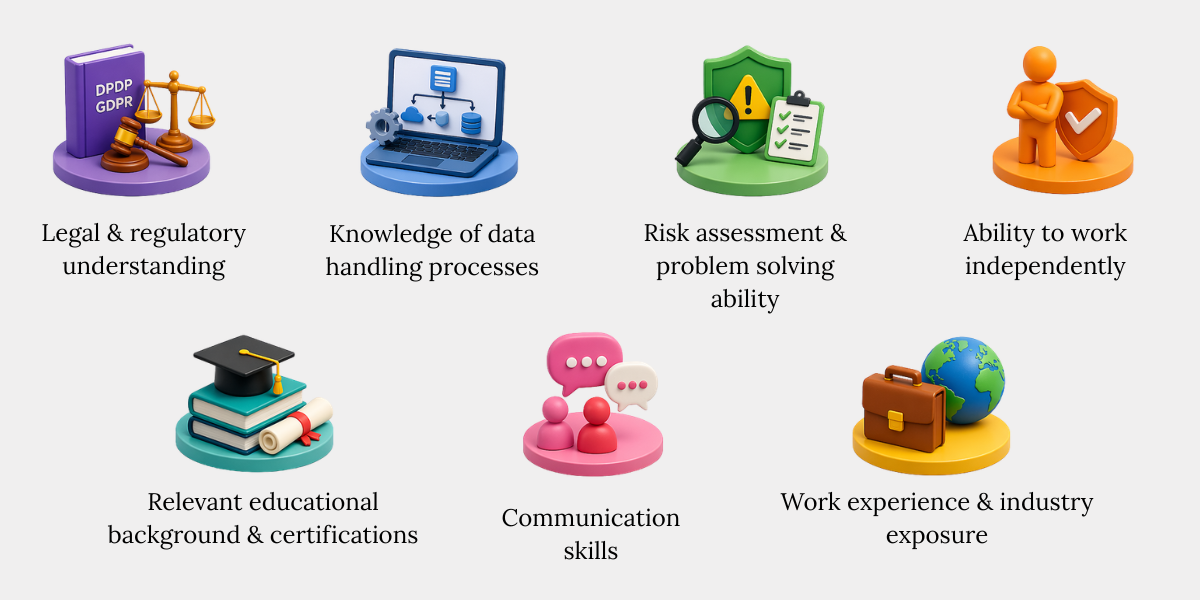
Here’s what that means in practice:
- Legal and regulatory understanding
The DPO should understand laws like DPDP and GDPR. This includes knowing:
- What counts as personal data
- What rights users have
- What responsibilities a company has as a data fiduciary
For example, under DPDP, companies must take consent before collecting data. The DPO should ensure this is implemented correctly across websites or apps.
- Understanding of data handling processes
The DPO should know how data moves inside the organization.
For example:
- Data collected from a website form
- Stored in internal systems
- Shared with third-party vendors
If the DPO cannot understand this flow, they cannot identify risks.
- Risk assessment and problem-solving ability
The DPO should be able to identify where things can go wrong.
For instance:
- Storing unnecessary data
- Sharing data without proper agreements
- Not responding to user requests
They should also suggest practical fixes, not just highlight issues.
- Ability to work independently
The DPO must be able to raise concerns without pressure.
For example, if a business team wants to collect extra customer data for marketing, the DPO should be able to question whether it is necessary and legally allowed.
- Communication skills
The DPO should explain compliance in simple terms to different teams.
For example:
- Explaining consent requirements to marketing teams
- Explaining data retention rules to operations
If the DPO cannot communicate clearly, compliance will not be followed properly.
- Educational background and certifications
There is no legal requirement for a DPO to have a specific degree or certification under the Digital Personal Data Protection Act, 2023 or the General Data Protection Regulation.
However, a background in law, IT, or cybersecurity can help in understanding data protection requirements. Some professionals also pursue certifications like CIPP/E or CIPM, but these are not mandatory.
- Work experience and industry exposure
A DPO should have practical experience in areas like compliance, legal, IT, or data handling. While no minimum experience is defined by law, real-world exposure helps in identifying risks and managing compliance effectively.
For example, experience in sectors like finance, healthcare, or e-commerce helps in understanding how personal data is handled in that industry.
Can an Internal Employee Be Appointed as a DPO?
Yes, a company can appoint an internal employee as a DPO, as long as there is no conflict of interest and the person can perform the role independently. However, certain roles may not be suitable because they are directly involved in deciding how data is used.
Common examples of potential conflict:
- Head of IT
- Chief Technology Officer
- Marketing Head
These roles usually decide:
- What data is collected
- How it is processed
- How it is used for business purposes
If the same person is also the DPO, they would be reviewing their own decisions.
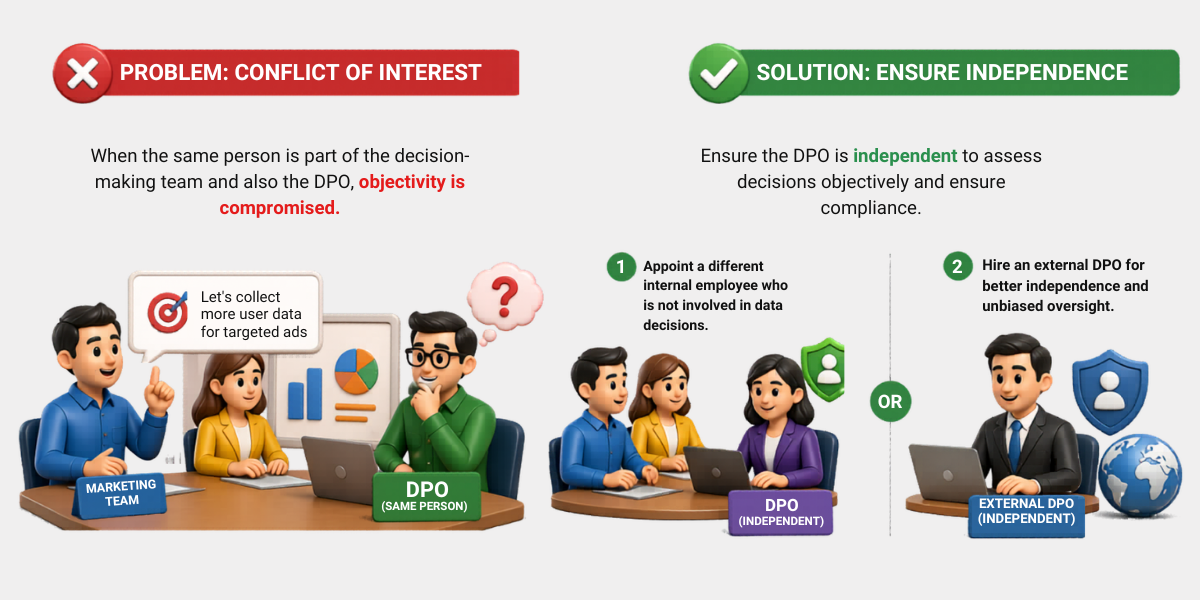
For example:
If the marketing team decides to collect additional user data for targeted ads, and the DPO is also part of that decision-making team, they may not objectively assess whether this is compliant.
In such cases, companies often:
- Appoint a different internal employee who is not involved in data decisions, or
- Hire an external DPO for better independence
Is Appointing a DPO Mandatory Under DPDP Act?
Under the DPDP Act, 2023, appointing a DPO is mandatory only for organizations classified as Significant Data Fiduciaries (SDFs). These are entities that process large amounts of personal data or handle data that could significantly impact individuals.
The government decides which organizations fall under this category based on several factors.
When does DPO become mandatory?
Under the Digital Personal Data Protection Act, 2023, appointing a DPO is mandatory only for organizations classified as Significant Data Fiduciaries (SDFs). This classification is based on factors such as the volume of personal data processed, the sensitivity of the data, the potential impact on individuals, and the use of technologies like profiling.
For example, a company handling data of millions of users, processing sensitive information like financial or health data, enabling financial transactions, or using algorithms for decision-making (such as credit scoring or targeted advertising) is more likely to fall under this category and therefore be required to appoint a DPO.
What are the Key DPO Responsibilities?
A DPO is responsible for ensuring that the organization follows data protection laws, manages risks, and responds to user rights properly. The role involves both advisory and monitoring functions.
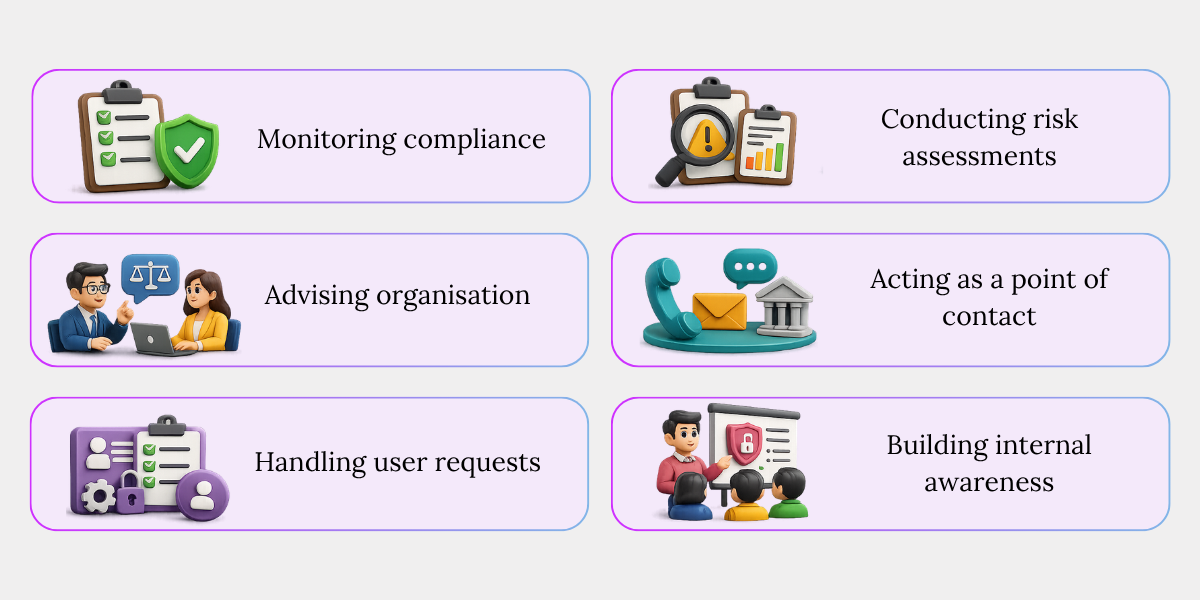
Here is how these responsibilities work in practice:
- Monitoring compliance
The DPO checks whether the company is following DPDP and GDPR requirements.
Example:
- Reviewing whether consent forms are clear and valid
- Checking if data is stored securely
- Ensuring policies are actually implemented, not just written
- Advising the organization
The DPO guides teams on how to handle data correctly.
Example:
If a company wants to launch a new feature that collects user data, the DPO advises:
- What data can be collected
- What legal basis is required
- What risks need to be addressed
- Handling user requests
Users have rights over their personal data.
The DPO ensures the company can:
- Provide access to data
- Correct incorrect data
- Delete data when requested
Example:
If a user asks for their data to be deleted, the DPO ensures the request is processed properly within timelines.
- Conducting risk assessments
Before new systems or processes are introduced, the DPO evaluates risks.
Example:
If a company starts sharing data with a third-party vendor, the DPO checks:
- Whether proper agreements are in place
- Whether data is protected
- Acting as a contact point
The DPO communicates with:
- Regulators
- Users (data principals)
Example:
If there is a data breach, the DPO may be responsible for coordinating communication with authorities.
- Building internal awareness
The DPO helps employees understand their responsibilities.
Example:
- Conducting training sessions
- Creating simple guidelines for teams
Without awareness, even well-designed policies fail in practice.
Conclusion
A Data Protection Officer (DPO) plays a critical role in ensuring that organizations handle personal data responsibly and legally.
Not every company is required to appoint one under the DPDP Act, but every company that deals with personal data needs clear accountability.
Choosing the right DPO means selecting someone who understands the law, can identify risks, and can guide the organization in a practical way.
Key Takeaways
- A DPO ensures proper handling of personal data and legal compliance
- A DPO can be an internal employee or external professional
- No fixed degree is required, but strong knowledge is essential
- Understanding data flows is critical to identify risks
- Practical experience helps manage real compliance situations
- Independence is important to avoid conflict of interest
- DPO is mandatory only for Significant Data Fiduciaries under DPDP
- The DPO’s role includes monitoring, advising, and handling user rights
Related Blog