Table of contents
By-Research Team
December 2, 2025 | 8 min read | DPDP
Introduction
In today’s digital world, data privacy is a business essential, not just a compliance step. Whether you’re a small business or a large enterprise, how you collect and protect personal data shapes trust and legal risk.
A key part of this is providing clear privacy notices and obtaining valid consent.
Under the Rule 3 DPDP Act 2025, organisations must explain what data they collect, why they collect it and ensure users freely agree to its use.
This blog explains what a good privacy notice requires, how to present it clearly, and what valid consent looks like.
Let’s dive in.
What Is Rule 3 All About?
Rule 3 focuses on Transparency & Lawful Processing. It gives specific rules for a privacy notice and consent.
In simple terms, it requires organisations to:
- Tell people what data is collected
- Explain why it’s collected
- Clarify how it will be used and shared
- Ensure individuals provide informed, free, and explicit consent where required
It sounds straightforward, but the details matter.
A weak or unclear privacy notice can render consent invalid and lead to compliance issues.
Essentials of Privacy Notice
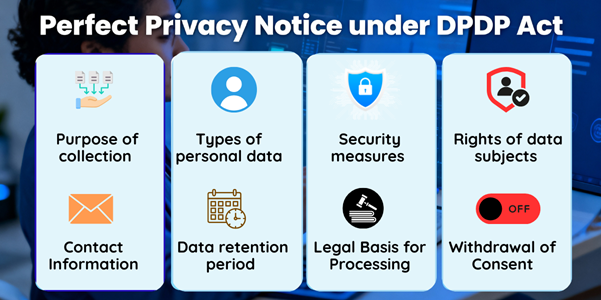
A privacy notice explains what personal data is collected, why it’s collected, and how it’s used, giving users clarity and control.
A privacy notice must give individuals everything they need to make an informed decision. It should never hide critical details in legal jargon or complex language.
Here’s what your notice must include:
1. Identity & Contact Information
People should know who is collecting their data.
- Your organisation’s name
- Contact details for privacy queries
- Data Protection Officer contact info (if applicable)
2. What Personal Data You Collect
Be specific vague categories raise red flags.
- Names, email addresses, payment details, cookies, IP addresses, etc.
- Sensitive data declarations, if applicable
3. Why You’re Collecting the Data
Explain your purpose clearly.
- Account creation
- Service delivery
- Personalisation
- Analytics
- Marketing
4. Legal Basis for Processing
There needs to be legal basis for data process which must be specified in the privacy notice
For example:
- Consent
- Legitimate interest
- Contractual necessity
- Legal obligation
If you rely on “legitimate interest,” make sure you state what that interest is.
5. How Data Is Used
This is where transparency really matters.
- How the data helps run the service
- How it supports marketing, security, or analytics
6. Who Data Is Shared With
List categories, not necessarily names.
- Payment processors
- Cloud hosting providers
- Marketing tools
- Analytics partners
7. Data Retention Periods
Organisations must clearly state how long they keep personal data, why it’s needed, and when it will be deleted or anonymised
8. User Rights
Privacy notices must clearly explain users’ rights and how to exercise them. These include:
 Access – seeing what data an organisation holds;
 Correction – fixing inaccurate information;
 Deletion – removing data when it’s no longer needed;
 Restriction – limiting how data is used;
 Objection – opting out of certain processing like marketing;
 Data Portability – receiving data in a usable format to move to another service.
Let users know how to exercise these rights.
9. How Users Can Withdraw Consent
It must be as easy to withdraw consent as it was to give it, and organisations should provide simple tools like account settings or unsubscribe links that let users change or revoke their choices at any time.
How to Make Privacy Notices Clear, Simple, and User-Focused
A compliant privacy notice isn’t just about the content it’s also about how the content is presented.
Here are characteristics of a well-designed, Rule-3-compliant notice:
1. Clear and Simple Language
Avoid legal complexity. Write for the average reader.
2. Easily Accessible
Not buried in footers or hidden links.
3. Presented at the Right Time
Users should see it before data collection, not afterward.
4. Layered Format
This is one of the most effective approaches:
- Short summary at the top
- Expandable sections with more detail
- Links to full policies
5. Consistent Across All Platforms
Your website, mobile app, and offline forms should all align.
6. Visually Clean
Use headings, short paragraphs, icons, or infographics anything that reduces friction.
Consent Requirements Under Rule 3
Consent is valid only if it meets specific conditions. Many organisations think a checkbox solves the problem unfortunately, it doesn’t.
A valid consent process must meet the following standards:
1. Freely Given
No pressure. No forced opt-ins.
Users should not lose access to essential services because they said no to optional data processing.
2. Specific
One checkbox cannot cover multiple purposes.
For example:
- “Marketing emails”
- “Personalised ads”
- “Data sharing with partners”
Each should have its own toggle.
3. Informed
The user must understand what they’re agreeing to. This ties directly back to the quality of your privacy notice.
4. Unambiguous
Silence, pre-checked boxes, or vague wording do not count as consent.
5. Reversible
Users need an easy way to withdraw consent at any time.
Examples of Good DPDP Compliance
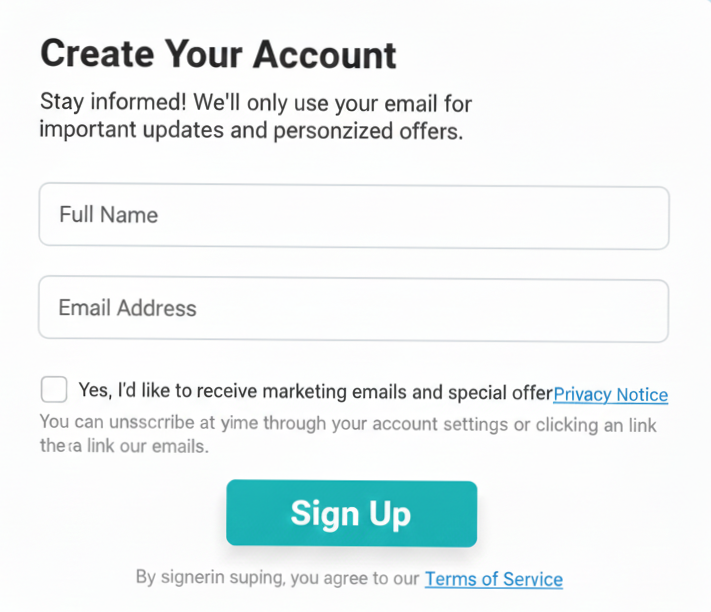
Example 1: A Transparent Signup Form
A clean signup page may include:
- A short line explaining why the email is needed
- A clear link to the privacy notice
- A separate checkbox for marketing consent
- A simple “unsubscribe anytime” statement
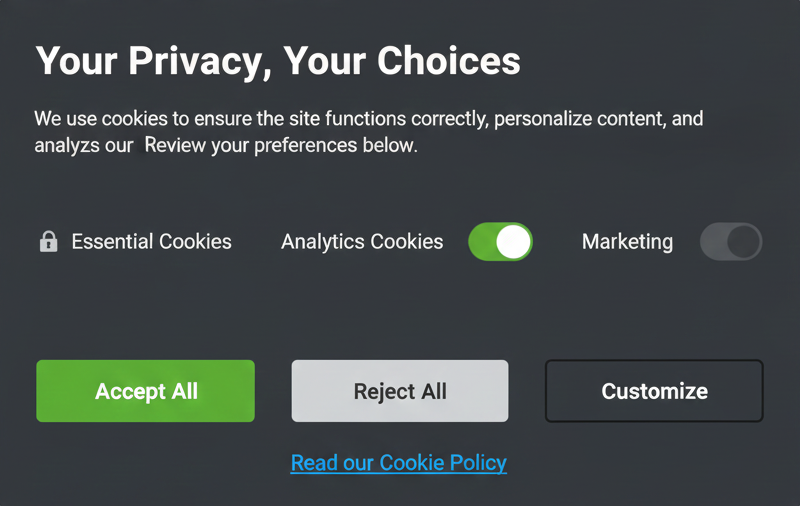
Example 2: Cookie Banners Done Right
A compliant cookie banner includes:
- Clear purpose categories
- “Accept all,” “Reject all,” and “Customise” options
- No nudging or manipulative design
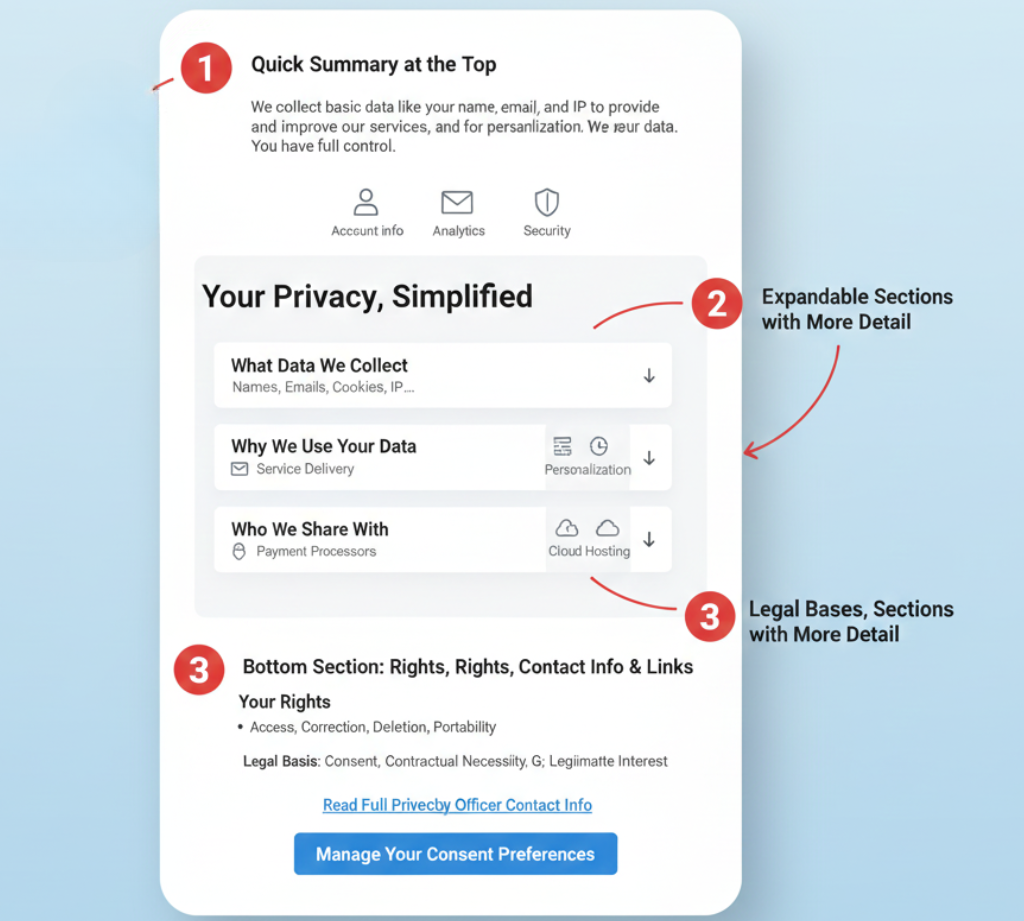
Example 3: Layered Privacy Notice
A simple, user-friendly structure:
- Top Section: Quick summary of what data is collected
- Second Section: Buttons linking to longer details
- Bottom Section: Legal bases, rights, contact info
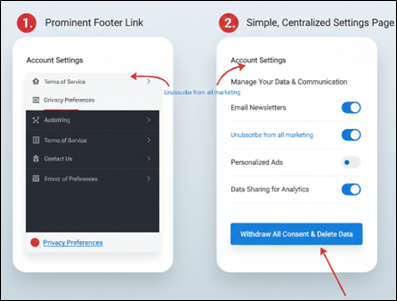
Example 4: Withdrawal Made Easy
A footer link labelled “Privacy Preferences” that lets users change marketing or cookie consent instantly.
Common Mistakes to Avoid
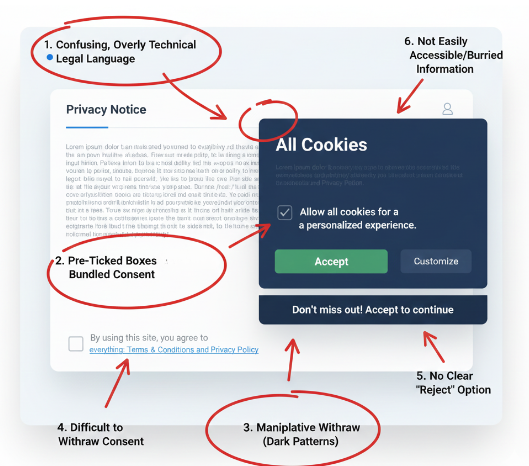
Even well-meaning organisations get these wrong:
- Using pre-ticked boxes
- Burying consent inside long terms & conditions
- Making withdrawal difficult
- Using confusing, overly technical legal language
- Collecting more data than needed
- Not updating the privacy notice when practices change
Avoiding these mistakes protects both compliance and user trust.
Why This Matters for Your Organisation
Data privacy isn’t just about avoiding penalties although fines can be significant. It’s also about maintaining credibility.
Users reward companies that respect their personal information.
When businesses get privacy notices and consent right, they:
- Build long-term trust
- Reduce regulatory risk
- Improve customer experience
- Enhance brand reputation
- Increase transparency in communication
In a world where data breaches and dark patterns are increasingly recognised and criticised, being upfront about data practices is a competitive advantage.
Conclusion
Rule 3 of the DPDP Act promotes transparency and trust. Clear privacy notices and simple consent processes show respect for user control and responsible data handling.
Keep it transparent, easy to understand, and user-first to build trust in the digital age.
Key takeaways
- Rule 3 requires full transparency on what data is collected, why, how it’s used, and ensuring informed, genuine user consent.
- Privacy notices must clearly explain who collects data, what is collected, why it’s used, legal bases, sharing, retention, user rights, and withdrawal options.
- Privacy notices must be user-friendly clear, easy to find, well-timed, simple in design, and consistent across platforms.
- Valid consent must be freely given, specific, informed, unambiguous, and easy to withdraw.
- Good DPDP compliance means clear notices, simple consent tools, easy withdrawal, and avoiding dark patterns.
- Strong privacy practices build trust, reduce legal risk, and offer a competitive advantage.