Table of contents
By-Research Team
July 31, 2026 | 7 min read | Privacy
Privacy Risk Assessment: A Practical Guide to Identifying and Managing Privacy Risks
Organizations process large volumes of personal data every day, but privacy risks often go unnoticed until they result in a complaint, data breach, or regulatory scrutiny. New technologies, third-party vendors, and evolving business processes can all introduce risks that aren't immediately visible.
That's why a privacy risk assessment is essential. It provides a structured way to identify, evaluate, and manage privacy risk before it impacts individuals or the organization. By assessing risks proactively, organizations can strengthen privacy governance, demonstrate accountability, and make informed decisions about personal data processing.
This privacy risk assessment guide explains what a privacy risk assessment is, why it matters, when organizations should conduct one, and how it helps build a stronger privacy compliance program.
What Is a Privacy Risk Assessment?
A privacy risk assessment is a structured process that helps organizations identify, evaluate, and manage risks associated with the collection, use, storage, sharing, and deletion of personal data. Unlike a cybersecurity assessment, which focuses on protecting systems, it evaluates the entire data lifecycle—including purpose limitation, access controls, data retention, third-party processing, and the potential impact on individuals' privacy.
Think of it as reviewing a building blueprint before construction begins. Identifying weaknesses early helps organizations address privacy risks before introducing new technologies, engaging vendors, or launching new data processing activities.
Why Is a Privacy Risk Assessment Important?
A privacy risk assessment helps organizations identify and address privacy risks before they become compliance issues, operational disruptions, or reputational damage. Instead of reacting to incidents after they occur, organizations can proactively evaluate how personal data is processed, implement appropriate safeguards, and strengthen overall privacy governance.
It also supports regulatory compliance by demonstrating accountability, improving oversight of third-party data processing, and helping protect personal data throughout its lifecycle.
Most importantly, a privacy risk assessment encourages organizations to ask not just whether personal data can be processed, but whether it should be processed in that way and what privacy risks it may create.
When Should You Conduct a Privacy Risk Assessment?
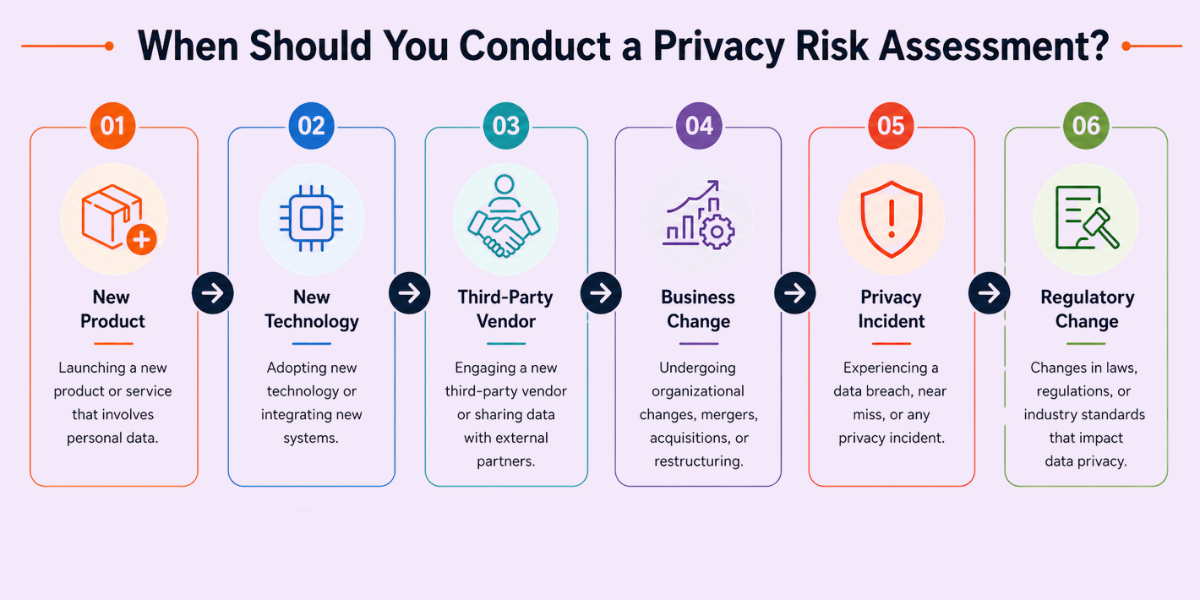
A privacy risk assessment should be conducted whenever a new or significantly changed processing activity could affect individuals' privacy. Rather than treating it as a one-time compliance exercise, organizations should perform assessments whenever changes introduce new privacy risks.
-
Before Launching a New Product or Service
New products often involve new types of personal data or processing activities. Assessing privacy risks early helps address potential issues before launching.
-
Before Implementing New Technologies
Technologies such as AI, cloud platforms, or analytics tools can change how personal data is processed. A privacy risk assessment helps identify and mitigate risks before implementation.
-
When Onboarding Third-Party Vendors
Before sharing personal data with vendors or service providers, assess how they will process, protect, and manage the data throughout the engagement.
-
When Business Processes Change
Changes such as expanding into new markets, restructuring operations, or introducing new workflows can create new privacy risks that should be evaluated.
-
After Significant Privacy Incidents
A privacy incident may reveal gaps in existing controls. Conducting a fresh assessment helps identify root causes and strengthen future safeguards.
-
When Privacy Regulations Change
New or updated privacy laws may introduce additional compliance obligations. Reviewing your privacy risk assessment helps ensure existing practices remain aligned with current requirements.
How to Conduct a Privacy Risk Assessment
A privacy risk assessment follows a structured process to identify how personal data is processed, evaluate potential privacy risks, assess existing controls, and implement measures to reduce those risks. Using a consistent framework helps organizations make informed decisions and embed privacy into everyday business operations.
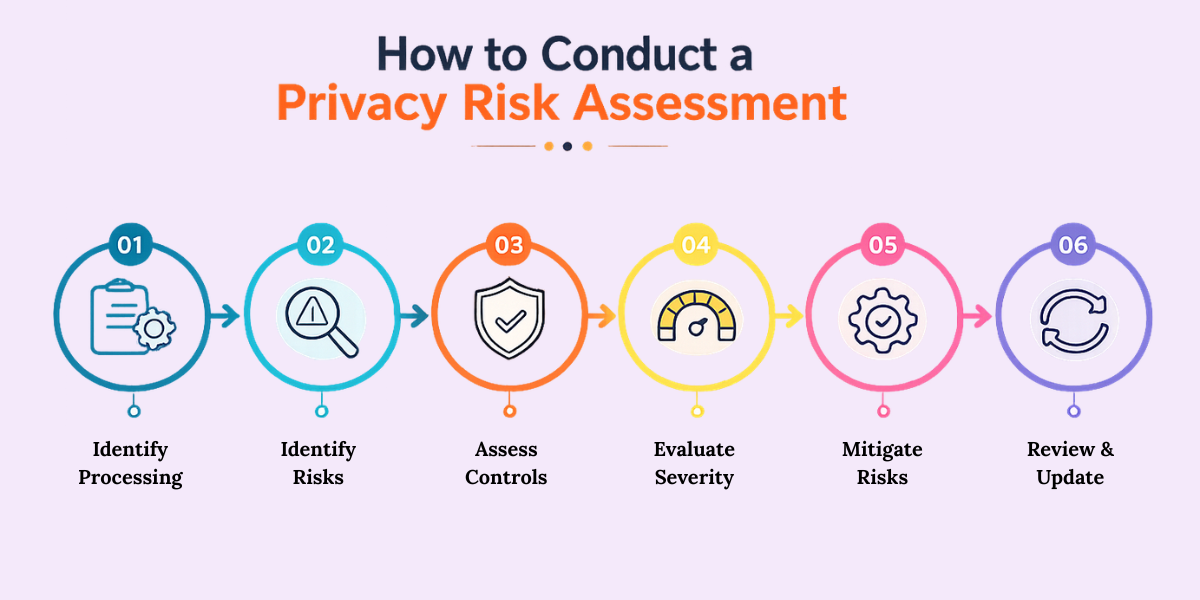
Build your assessment using the following roadmap.
-
Identify the Processing Activity
Start by understanding what personal data is being processed, why it is collected, who is involved, and whether third parties have access. This provides the foundation for assessing privacy risks.
-
Identify Potential Privacy Risks
Evaluate how the processing activity could affect individuals' privacy. Look for risks such as excessive data collection, unauthorized access, unnecessary data sharing, or prolonged data retention.
-
Assess Existing Privacy Controls
Review the technical, organizational, and contractual safeguards already in place. This helps determine whether current controls are sufficient to manage identified privacy risks.
-
Evaluate Risk Severity
Assess each risk based on its likelihood and potential impact on individuals. Prioritizing risks ensures that the most critical issues are addressed first.
-
Define Risk Mitigation Measures
Identify practical actions to reduce privacy risks, such as strengthening access controls, limiting data collection, updating vendor agreements, or improving retention practices.
-
Document Findings and Review Regularly
Record the identified risks, mitigation actions, responsible owners, and review dates. Privacy risk assessments should be reviewed regularly to reflect changes in business processes, technologies, and regulatory requirements.
Need help assessing your organization's privacy risks?
Explore our Privacy Assessment services ↗ to identify privacy risks, evaluate existing controls, and build a practical roadmap for stronger privacy governance.
Questions to Ask During a Privacy Risk Assessment
A privacy risk assessment is only as effective as the questions it asks. Reviewing key aspects of personal data processing helps organizations identify hidden privacy risks, strengthen governance, and make informed decisions before issues arise.
Ask the following questions during every assessment:
- Why are we collecting this personal data?
- Are we collecting more personal data than necessary?
- Who has access to personal data?
- How is personal data protected?
- Is personal data shared with third parties?
- How long is personal data retained?
- What happens if a privacy incident occurs?
How Often Should You Perform a Privacy Risk Assessment?
Organizations should perform a privacy risk assessment whenever significant changes affect personal data processing and review existing assessments periodically to ensure they remain accurate. The appropriate frequency depends on the organization's risk profile, business activities, and regulatory obligations.
There is no universal schedule that applies to every organization. A business introducing new technologies every quarter will require more frequent assessments than one with relatively stable processing activities. The key is to make privacy risk assessments event-driven rather than relying solely on annual reviews.
As a practical approach, organizations should review their privacy risks:
- Before introducing new products, services, or technologies
- When implementing major business process changes
- Before onboarding new third-party processors
- Following significant privacy or security incidents
- After major regulatory or legal changes
- As part of periodic governance reviews, even when no significant changes have occurred
In our observation, organizations that integrate privacy risk assessments into project planning and change management identify issues earlier, reduce remediation costs, and build stronger privacy governance over time.
Conclusion
A privacy risk assessment is more than a compliance requirement—it's a decision-making tool that helps organizations understand how personal data is processed, identify potential privacy risks, and implement appropriate safeguards before those risks become incidents.
As organizations adopt new technologies, engage more vendors, and process increasing volumes of personal data, privacy risks will continue to evolve. Conducting regular privacy risk assessments enables organizations to move from reactive compliance to proactive privacy governance, strengthening both regulatory readiness and stakeholder trust.
Key Takeaways
- A privacy risk assessment helps identify and manage privacy risks before they become compliance or operational issues.
- Conduct assessments whenever new technologies, vendors, business processes, or regulations introduce changes to personal data processing.
- Follow a structured approach to identify processing activities, evaluate risks, assess controls, and implement mitigation measures.
- Ask the right questions to uncover hidden privacy risks and strengthen privacy decision-making.
- Review privacy risk assessments regularly to keep pace with evolving business operations and regulatory requirements.
- Embedding privacy risk assessments into everyday governance helps build accountability, reduce risk, and strengthen long-term privacy compliance.
Related Blog