Table of contents
By-Research Team
June 2, 2026 | 7 min read | Cybersecurity
Signs Your Personal Data Has Been Breached
Most people imagine a data breach as a dramatic cyberattack involving flashing screens, frozen bank accounts, or massive corporate headlines.
Reality is quieter. Much quieter. In many cases, the first signs of data breach exposure look ordinary—an OTP you never requested, a suspicious WhatsApp login alert, or scam calls that suddenly increase for no obvious reason.
That is the real danger. Small digital irregularities are often treated like background noise until financial fraud, identity misuse, or account takeovers begin surfacing weeks later.
What Are the Common Signs That Your Personal Data Has Been Breached?
The most common signs of a data breach include unexpected OTP requests, suspicious login attempts, scam calls, fake banking messages, unauthorized transactions, SIM card disruptions, and password reset emails you never initiated. These signals often indicate that personal information has entered phishing or fraud ecosystems operating across multiple platforms.
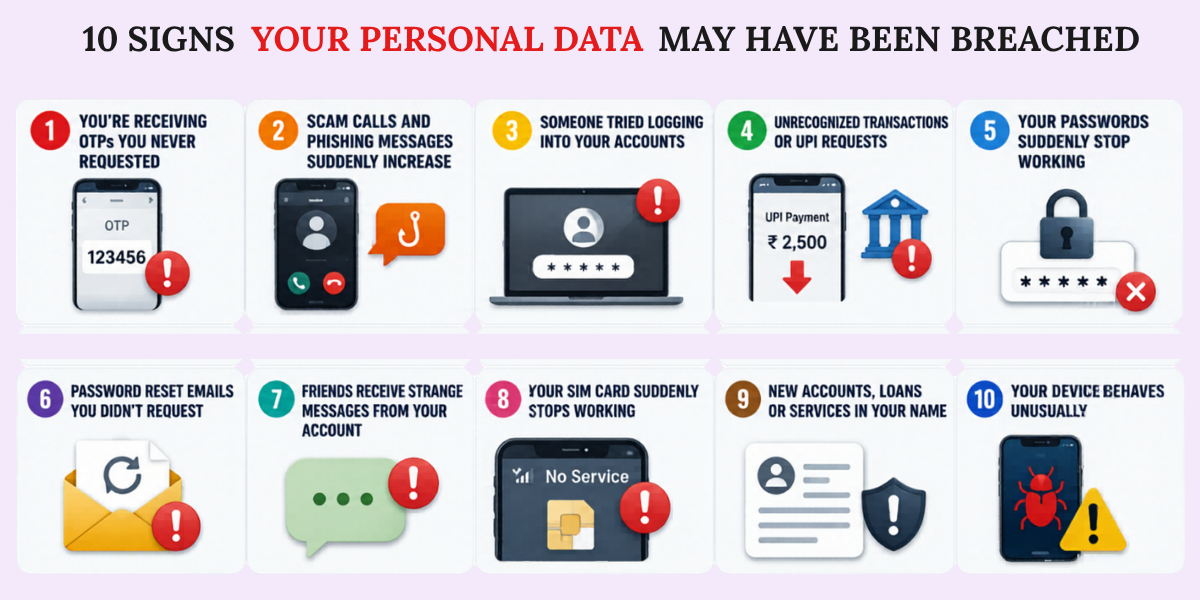
1. You’re Receiving OTPs You Never Requested
Treat unexpected OTPs like smoke before a fire. They often indicate someone is attempting to access your account using leaked credentials or stolen phone numbers.
This process is commonly linked to credential stuffing, where attackers reuse passwords exposed in earlier data leaks across banking apps, email accounts, and social media platforms. It is the digital equivalent of trying one stolen key across an entire apartment complex.
Do not ignore repeated OTP attempts even if access was unsuccessful.
2. Scam Calls and Phishing Messages Suddenly Increased
A sudden rise in spam calls, fake KYC alerts, investment scams, or banking verification messages is one of the strongest data leak signs ordinary users' experiences.
Why does this happen? Because breached databases are frequently sold in bulk on cybercrime marketplaces.
One leaked phone number rarely stays isolated. It becomes part of a larger targeting ecosystem.
3. Someone Tried Logging into Your WhatsApp, Gmail, or Social Media Accounts
Unexpected login alerts should never be treated casually. They often indicate attackers already possess partial access to your credentials or recovery information.
WhatsApp takeover attempts have increased significantly in India due to OTP interception scams and social engineering attacks. Attackers frequently exploit urgency:
- “Your account will be blocked.”
- “Verify this immediately.”
- “Send the OTP for verification.”
4. You Notice Transactions or UPI Requests You Don’t Recognize
Unauthorized UPI requests, unfamiliar transactions, or failed debit attempts may indicate your financial information has already entered fraud circulation.
According to RBI advisories, phishing, remote access fraud, and fake payment requests remain major digital banking threats.
A failed transaction attempt is still a warning sign. Sometimes attackers test small amounts before larger fraud attempts begin.
5. Your Passwords Suddenly Stop Working
A password unexpectedly failing may indicate your account credentials were changed without authorization.
Attackers commonly change passwords immediately after gaining access to prevent legitimate users from reclaiming accounts. This is especially dangerous when users reuse passwords across multiple platforms—a surprisingly common habit despite years of security awareness campaigns.
6. You Receive Password Reset Emails You Didn’t Request
Unexpected password reset emails usually indicate someone is actively probing your accounts.
This may involve:
- Leaked email credentials
- Automated bot attacks
- Recovery exploitation
- Phishing reconnaissance
Repeated reset requests across platforms should be treated as a coordinated warning signal.
7. Your Friends Receive Strange Messages from Your Account
If friends or colleagues report receiving suspicious links, payment requests, or unusual messages from your account, assume compromise until proven otherwise.
Social media and messaging account hijacks increasingly rely on trust exploitation. Attackers understand that people are more likely to click links sent by familiar contacts.
8. Your SIM Card Suddenly Stops Working
A SIM unexpectedly losing network connectivity may indicate a SIM swap attack, where fraudsters transfer your number to another device.
This tactic is particularly dangerous because many financial services still rely heavily on SMS-based verification. Once attackers control the SIM, they may intercept OTPs, banking alerts, and authentication messages.
9. New Accounts, Loans, or Services Appear in Your Name
One of the most serious signs of identity misuse is discovering:
- Unknown loans
- Unauthorized credit applications
- Unfamiliar subscriptions
- Accounts opened using your details
This typically indicates that leaked personal data—including PAN details, addresses, or identity documents—has already been weaponized.
10. Your Device Starts Behaving Unusually After Clicking a Suspicious Link
Sudden battery drain, excessive popups, unknown apps, overheating, or unusual permissions may indicate malware or spyware installation.
Attackers increasingly distribute malicious links through:
- Fake courier updates
- KYC alerts
- Job offers
- Banking warnings
- Social media messages
Why Are Personal Data Breaches Becoming More Common in India?
Personal data breaches are increasing in India due to rapid digital adoption, large-scale app ecosystems, growing UPI usage, aggressive data collection practices, and rising phishing sophistication. As more services move online, the volume of personal information circulating across platforms has expanded faster than consumer security awareness.
India’s digital economy has scaled rapidly:
- UPI transactions
- E-commerce platforms
- Healthcare apps
- Telecom verification
- Online education
- Fintech ecosystems
Each platform collects data. Each database becomes a potential target.
In practical terms, modern users often leave digital footprints across dozens of platforms without fully understanding where their information ultimately travels.
That creates fragmentation. Fragmentation creates exposure.
The challenge is not merely hacking anymore. It is ecosystem-wide data circulation.
How Can You Reduce the Risk of Future Data Breaches?
Reducing future breach risks requires building stronger digital hygiene habits across passwords, devices, apps, and financial accounts. No single tool acts as a perfect shield.
Effective protection comes from layered defences working together—similar to how a fortress relies on walls, gates, surveillance, and guards rather than one lock alone.
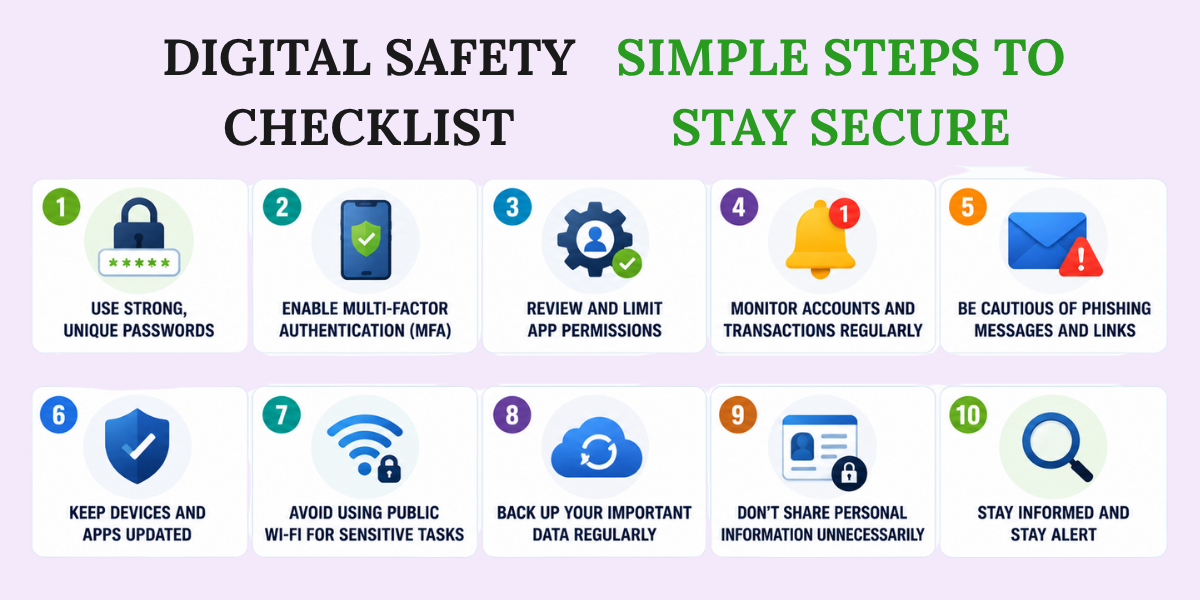
1. Build Strong Password Segmentation
Avoid reusing passwords across platforms.
Use:
- Password managers
- Long passphrases
- Unique credentials for critical accounts
2. Enable Multi-Factor Authentication (MFA)
MFA adds a second verification layer beyond passwords.
Prioritize MFA for:
- Email accounts
- Banking apps
- Cloud storage
- Social media
- Work platforms
3. Audit App Permissions Regularly
Many users unknowingly grant excessive permissions to apps requesting:
- Contacts
- Location
- Microphone access
- SMS visibility
Not every app needs full access to your digital life. Some platforms collect data aggressively simply because users never question default permissions.
4. Monitor Banking and Account Activity Frequently
Review:
- UPI requests
- Login history
- Linked devices
- Transaction alerts
- Account recovery settings
Early detection dramatically reduces fraud escalation risks.
5. Avoid Panic-Driven Clicking
Phishing attacks succeed because they manufacture urgency:
- “Account suspended.”
- “Verify immediately.”
- “Payment failed.”
- “KYC expires today.”
Pause first. Verify independently.
Conclusion
Most data breaches do not announce themselves loudly. They surface quietly through small disruptions people dismiss every day—unexpected OTPs, suspicious login alerts, scam calls, fake banking messages, or unusual account behaviour.
That is the uncomfortable reality of modern digital risk.
The digital world rewards convenience aggressively, but convenience without awareness often creates invisible vulnerabilities.
Build awareness early. Audit your digital habits regularly. Treat small warning signs seriously before they evolve into larger compromises.
Key Takeaways
- Unexpected OTPs, phishing calls, and suspicious login alerts are common signs of data breach exposure.
- Most personal data leaks become visible through everyday digital symptoms—not dramatic cyberattacks.
- UPI fraud attempts, fake KYC messages, and SIM swap incidents are growing risks in India’s digital ecosystem.
- Credential reuse remains one of the biggest drivers of account compromise.
- Strong passwords, MFA, permission audits, and transaction monitoring form a practical digital defence blueprint.
- Small warning signs often appear weeks before major fraud attempts occur.
- Data breaches are no longer only enterprise problems—they directly affect ordinary users, consumers, and families.
Related Blog