Table of contents
By-Research Team
May 22, 2026 | 8 min read | Cybersecurity
What To Do After Personal Data Leak: A Step-by-Step Guide
A personal data leak is no longer just a cybersecurity problem. It is an identity problem. One leaked password, Aadhaar copy, banking detail, or phone number can become the entry point for phishing attacks, SIM swap fraud, fake loans, account takeovers, and financial scams.
India’s cyber threat landscape is escalating rapidly. Cybersecurity incidents in India increased from 10.29 lakh in 2022 to 22.68 lakh in 2024, according to government data.
Here is the uncomfortable truth.
Most people do not lose money because of the leak itself. They lose money because they respond too slowly after the leak.
That is why your first few hours after discovering a data leak matter more than most people realize.
What Can Happen If Your Personal Data Gets Leaked?
A personal data leak can expose users to identity theft, financial fraud, phishing attacks, account takeovers, and impersonation scams. The severity depends on what information was leaked. Passwords and banking details create immediate financial risks, while leaked phone numbers and emails often become fuel for targeted scam campaigns and social engineering attacks.
Modern fraud is layered. Criminals no longer “hack” in the movie-style sense. They manipulate trust.
1. Identity Theft and Fake Accounts
Leaked personal data can be used for identity theft and fraud. Criminals may create fake accounts or misuse Aadhaar and PAN details for KYC verification.
- Fake accounts may be opened using stolen documents.
- Aadhaar and PAN details can be misused.
- Victims often discover fraud after financial damage occurs.
2. Banking and UPI Fraud
Leaked banking details can lead to unauthorized transactions and UPI scams.
- Fraudsters may send fake payment requests.
- Leaked phone numbers are often used for scam targeting.
- Small test transactions may happen before larger fraud attempts.
3. Phishing Emails and Scam Calls
Leaked emails and phone numbers are commonly used for phishing attacks and scam calls.
- Fake KYC or banking messages may increase after a data breach.
- Scam calls often use personal details to look genuine.
- Fraudsters create urgency to trick victims.
4. Social Media and WhatsApp Account Takeover
Attackers may use leaked credentials to access social media or WhatsApp accounts.
- Compromised accounts are often used to scam contacts.
- Reused passwords increase takeover risks.
- WhatsApp account hijacking is becoming more common.
5. SIM Swap Attacks
SIM swap fraud allows attackers to control your phone number and intercept OTPs.
- Banking OTPs may be stolen.
- Password reset requests can be hijacked.
- Multiple linked accounts may become vulnerable.
6. Fake Loans and KYC Misuse
Leaked Aadhaar, PAN, or income documents can be used for fake loans and KYC fraud.
- Criminals may apply for loans using stolen documents.
- Victims often discover fraud later through recovery notices.
- Shared KYC documents may circulate among scam networks.
7. Targeted Scams Using Leaked Personal Information
Modern scams are becoming more personalized using leaked data and AI tools.
- Scam messages may include real personal details.
- AI-generated voice scams are increasing.
- Fraud attempts now appear more believable.
Things to Do Immediately After Discovering a Data Leak
The first response after a personal data leak should focus on containment. Secure compromised accounts, change passwords, enable multi-factor authentication, monitor financial activity, and isolate vulnerable systems or devices. Fast action reduces the attack surface before criminals escalate access or exploit leaked credentials across multiple platforms.
Panic is understandable. Delay is expensive.
1. Change Compromised Passwords Immediately
Prioritize password changes for your most critical accounts first.
- Change passwords for email, banking, and UPI applications immediately.
- Avoid reusing old passwords or similar password combinations.
- Use long, unique passwords with a mix of characters and symbols.
2. Enable Two-Factor Authentication (2FA)
2FA creates an additional security layer even if passwords are compromised.
- Enable MFA on email, banking, cloud, and social media accounts.
- Prefer authentication apps over SMS-based OTP authentication where possible.
- Review backup authentication methods regularly.
Think of MFA as a second security gate protecting critical accounts.
3. Secure Your Primary Email Account First
Your email account controls password recovery across most platforms.
- Review linked devices and active login sessions.
- Remove suspicious forwarding rules or third-party integrations.
- Audit recovery email addresses and phone numbers.
4. Log Out from All Active Sessions and Devices
Terminate access from unknown or inactive devices immediately.
- Remove old browsers and unused devices from account settings.
- Log out from public or shared systems.
- Revoke unnecessary third-party app access.
5. Check Bank Accounts and UPI Apps for Suspicious Activity
Review financial activity closely after a data breach.
- Monitor recent transactions and beneficiary additions.
- Watch for unauthorized autopay requests.
- Enable instant transaction notifications.
Even minor suspicious activity should be investigated immediately.
6. Contact Your Bank if Financial Details Were Exposed
Fast reporting improves fraud response effectiveness.
- Freeze compromised cards temporarily if necessary.
- Reset UPI PINs and banking credentials.
- Disable international transactions if unusual activity appears.
Early escalation increases the chances of fraud containment and transaction recovery.
7. Beware of Phishing Emails, SMS, and Scam Calls
Fraud attempts often increase after leaked data enters criminal circulation.
- Avoid clicking unknown links or downloading attachments.
- Never share OTPs over calls or messages.
- Verify customer care numbers through official websites only.
What To Do Within the First 24 Hours After a Data Leak
The first 24 hours after a data breach should focus on assessment, investigation, and long-term containment. Once immediate threats are controlled, users should identify what information was exposed, review account access history, preserve evidence, and monitor for signs of identity theft or financial fraud.
The goal is no longer just damage control.
It is understanding the full extent of the exposure.
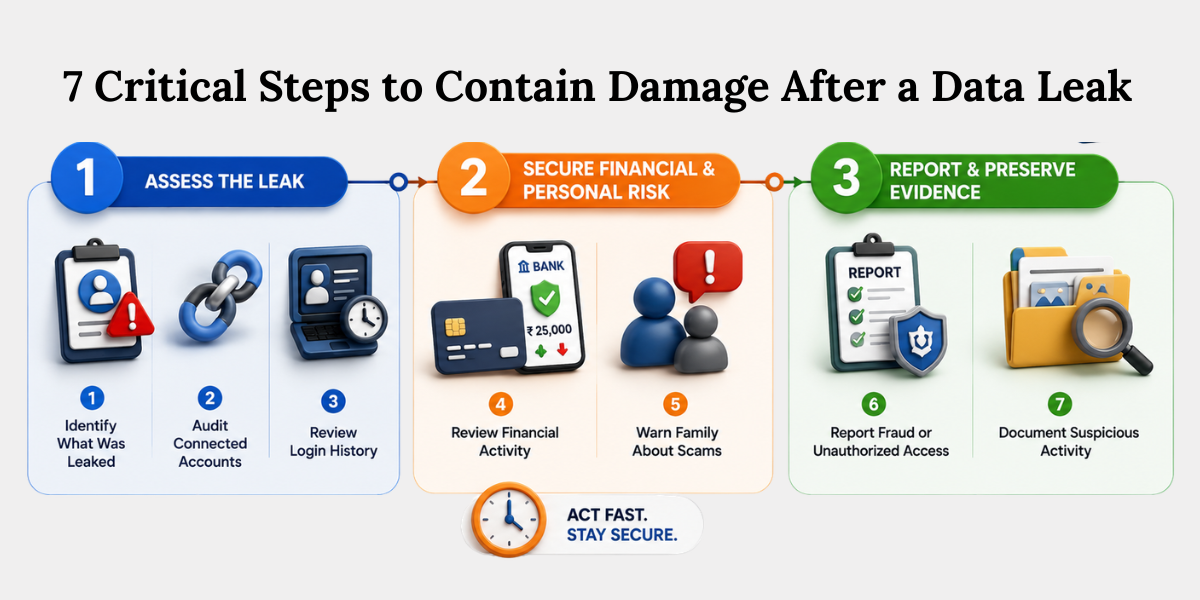
1. Identify Exactly What Information Was Leaked
Different types of leaked data create different risks. Understanding what was exposed helps prioritize your next steps effectively.
- Check whether passwords, banking details, Aadhaar, PAN, or phone numbers were leaked.
- Identify which accounts are connected to compromised information.
- Prioritize high-risk accounts such as banking, email, and government platforms first.
2. Audit Connected Accounts and Recovery Access
Many accounts remain connected through recovery emails, linked devices, or third-party integrations. These hidden connections can create long-term vulnerabilities even after passwords are changed.
- Review linked recovery emails and phone numbers.
- Remove old devices, browsers, and inactive sessions.
- Revoke access for unused third-party apps and integrations.
3. Review Login History and Device Access
Checking login history helps identify whether unauthorized access already occurred before you discovered the breach.
- Review recent login locations and device activity.
- Look for unknown browsers, devices, or IP locations.
- Enable login alerts and unusual activity notifications.
4. Review Financial Statements and Credit Activity
Some fraud attempts may not appear immediately after a data leak. Reviewing financial records early can help detect unauthorized activity before it escalates.
- Check bank statements and card activity carefully.
- Monitor for unknown transactions or beneficiary additions.
- Watch for unexpected loan, EMI, or credit-related notifications.
5. Inform Family Members About Possible Impersonation Scams
Attackers frequently target trust networks after account compromise. Friends, family members, or colleagues may become secondary targets.
- Warn contacts about fake money requests or impersonation attempts.
- Inform family members about possible scam calls or messages.
- Verify urgent financial requests through direct calls.
6. Report Fraud or Unauthorized Access Immediately
Reporting incidents early creates official records that may help during investigations, banking disputes, or fraud recovery processes.
- Report cybercrime through banking channels and official authorities.
- Notify telecom providers in case of SIM-related compromise.
- Retain complaint numbers, emails, and support ticket references.
Indian users can report cyber fraud through the National Cyber Crime Reporting Portal.
7. Document Suspicious Activity for Future Disputes
Maintaining records helps strengthen fraud claims, banking disputes, and legal escalation if needed later.
- Save scam messages, suspicious emails, and transaction alerts.
- Record timestamps of unauthorized access attempts.
- Maintain copies of complaint acknowledgements and support responses.
Conclusion
Data leaks are no longer rare events. They are part of modern digital reality.
The real differentiator is not whether your information gets exposed. It is how quickly and intelligently you respond after exposure occurs.
Your email, banking access, identity documents, and authentication systems form the core of your digital identity. Once compromised, attackers attempt to move across connected accounts and services rapidly.
Build layered defences. Respond fast. Reduce exposure. Audit continuously.
Because in today’s threat landscape, digital trust is not permanent. It is actively defended every single day.
Key Takeaways
- A personal data leak can lead to identity theft, banking fraud, phishing attacks, account takeovers, and fake loan scams.
- The first step after a data breach is to secure critical accounts by changing passwords and enabling MFA.
- Your email account should be secured immediately because it controls password recovery for most platforms.
- Financial accounts, UPI apps, and linked devices should be monitored closely for suspicious activity.
- Within the first 24 hours, identify exactly what information was leaked and review connected accounts and login history.
- Fast response, continuous monitoring, and strong digital hygiene can significantly reduce long-term damage after a data leak.
Related Blog